
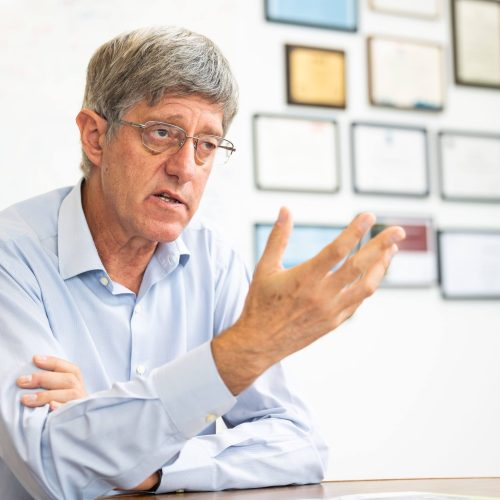
Arlindo Oliveira nasceu em Angola e viveu em Moçambique, Portugal, Suíça, Estados Unidos (Califórnia, Massachusetts e Maryland), Japão e China (Macau). Licenciou-se em Engenharia Electrotécnica e de Computadores pelo Instituto Superior Técnico (IST) e doutorou-se na mesma área pela Universidade da Califórnia em Berkeley, com uma bolsa Fulbright.
Foi professor convidado do MIT e investigador do INESC, do CERN, do Electronics Research Laboratory da UC Berkeley, dos Berkeley Cadence Laboratories e da Universidade de Tóquio. Foi membro do Conselho Nacional de Ciência Tecnologia e Inovação e do Conselho Consultivo do Painel de Ciência e Tecnologia do Parlamento Europeu (STOA). É professor distinto do IST, presidente do INESC, professor convidado da Universidade de Ciência e Tecnologia de Macau, administrador não executivo da Caixa Geral de Depósitos e investigador do INESC-ID. Publicou cinco livros, traduzidos em diversas línguas, e centenas de artigos científicos em revistas e conferências internacionais da especialidade, nas áreas dos algoritmos, inteligência artificial, aprendizagem automática, bioinformática e arquitectura de computadores.
É membro da Academia das Ciências de Lisboa, da Academia da Engenharia, do IEEE, da ACM e fellow do ELLIS. Foi administrador de diversas empresas e instituições, assim como presidente do Instituto Superior Técnico, do INESC-ID e da Associação Portuguesa para a Inteligência Artificial. Foi membro do Conselho Nacional de Ciência Tecnologia e Inovação e do Conselho Consultivo do Painel de Ciência e Tecnologia do Parlamento Europeu (STOA). Recebeu diversos prémios e distinções, entre os quais o prémio Universidade Técnica de Lisboa/Santander por excelência na investigação, o prémio de carreira da GALP/Academia da Engenharia e o Prémio Carreira da ACEPI. Nos seus (limitados) tempos livres gosta de esquiar, fazer caminhadas, jogar xadrez e ténis, e também de especular sobre o futuro da humanidade.
Arlindo Oliveira was born in Angola and lived in Mozambique, Portugal, Switzerland, United States, Japan, and China. He obtained his BSc and MSc degrees in Electrical Engineering and Computer Science (EECS) from Instituto Superior Técnico (IST) and his PhD degree, also in EECS, from the University of California at Berkeley, where he was a Fulbright fellow.
He was invited professor at MIT and a researcher at INESC, CERN, the Electronics Research Laboratory of UC Berkeley, the Berkeley Cadence Laboratories and the University of Tokyo. He is a distinguished professor of IST, president of INESC, distinguished visiting professor at Macau University of Science and Technology, member of the board of Caixa Geral de Depósitos and a researcher at INESC-ID. He authored five books, translated into different languages, and hundreds of articles in international conferences and journals, in the areas of algorithms, artificial intelligence, machine learning, bioinformatics and computer architecture.
He is a member of the Lisbon Academy of Sciences, of the Portuguese Academy of Engineering, of IEEE, of ACM and a fellow of ELLIS. He has been on the boards of several companies and institutions and is a past president of Instituto Superior Técnico, of INESC-ID and of the Portuguese Association for Artificial Intelligence. He was also a member of the National Council for Science Technology and Innovation and of the Advisory Board of the Science and Technology Options Assessment (STOA) Panel of the European Parliament. He received several prizes and distinctions, including the Technical University of Lisbon / Santander prize for excellence in research, the GALP/Academy of Engineering Career Prize and the ACEPI Career Prize. In his (limited) free time, he likes skiing, hiking, playing chess and tennis, as well as speculating about the future of humanity.
Sessão / Session: A tecnologia como nova ferramenta de poder / Technology as a new tool of power
